


Previous Story
Summer Days at the Amusement Park
 Now that summer is in full swing many Wayne-ites will make their way to Cedar Point or Michigan Adventure for a fun day of rides and coasters, but did you know that in the past residents didn’t have to go so far to visit an amusement park? In the 1920s the U.S. had over 4,000 amusement parks, Michigan had more than 50 and Detroit had at least 8.
In the days before many cars, radio and TV, going to the amusement park was the thing to do. These parks often had beaches, concessions, small rides and maybe a coaster or two, but the big draw was the big band music and dancing. One of the earliest amusement parks in the Detroit area was Sugar Island, a small park on an island in the river south of Grosse Isle. It ran from the 1880s-1930s and had a coaster, rides, baseball diamonds and a dance hall. It closed in the 1930s, unable to compete with its larger neighbor, Boblo Island.
Boblo opened in 1898 as a beach and picnic spot and quickly grew into Metro Detroit’s largest and most famous amusement park. Famous for its boat rides on the Columbia and St. Clair, Boblo had a tumultuous history, going bankrupt several times over the years.
AAA of Michigan revived the park in the 80s, perhaps its glory years, but the park closed in 1993 when its owner was nearly killed in a car crash. The park was broken up and sold, today the island is a housing development.
From 1897-1951 there was a park called Tashmoo Park at the northern tip of lake St. Clair near Algonac. This park had a merry go round, coaster, roller rink, dance hall and picnic grounds. After their steamship sank, the great depression and WWII, the park couldn’t survive and was turned into a marina.
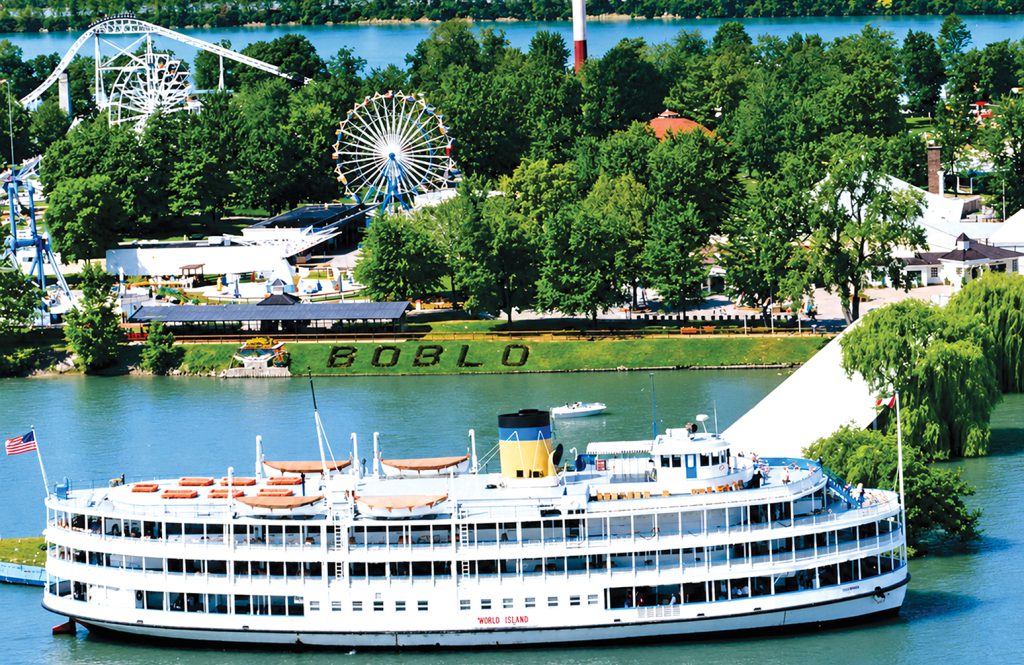
The iconic Boblo Boat recalls the days when generations of families boarded ferries bound for Boblo Island Amusement Park, a beloved destination on the Detroit River.
Along Jefferson at the foot of the Belle Isle bridge was a park called Electric Park, which ran from 1906-1928. The park was lit by 75,000 lightbulbs, had three roller coasters, a Ferris wheel and many live circus acts. After years of questionable building, management issues and several fires the park was condemned and torn down in 1928, the land becoming Gabriel Richard Park.
Walled Lake had a popular amusement park, called Walled Lake Park. It ran from 1919-1968 and was at 13 mile and Novi Road. Dancing, waterslides, a rollercoaster and three beer gardens kept the park going for many years, but a devastating fire in 1965 led to decline and closure.
On Jefferson north of 9 Mile in St. Clair Shores was Jefferson Beach, a park which ran from 1927-1959. It had a ballroom for 3000 dancers, arcade, bathhouse, and the longest rollercoaster in the world. Similar to Walled Lake, a fire in 1955 led to decline and the city tore the park down for a marina.
Edgewater is probably Detroit’s second most famous amusement park, operating at 7 mile and Berg from 1927-1981. The park had 23 rides, a hall of mirrors, Ferris wheel, roller rink and a rollercoaster “The Wild Beast”. This park was notable for its many famous Motown groups who gave concerts there, such as Stevie Wonder, Marvin Gaye, the Supremes and the Temptations. After years of deferred maintenance, the park closed and was auctioned in 1981.
At the corner of 8 Mile and Gratiot was a park called Eastwood, located in Eastpointe. It had a shooting range, freak show, merry go round, pool, rides and a large ballroom. After WWII Eastpointe began to fill in with suburbia and new residents complained about the noise, traffic and litter. Eventually the city forced the closure of the park.
While these parks were fun and games for some, not all were welcome. Virtually all of these parks were racially segregated and only allowed Black people on certain days or not at all. For many black Detroiters summer meant going to Idlewild, a black resort enclave in Lake County, MI. There they could find over 300 black-owned businesses, hotels, restaurants and clubs.
Island Park, located in Idlewild Lake, had a roller rink, bathing beach, concessions, dance hall and horse riding. Idlewild’s popularity peaked in the 20s-60s but has dwindled in the modern day.
We have records in the museum that Prouty and Glass Carriage Co., Wayne’s first major factory, took its employees for a summer picnic to Sugar Island at the turn of the century. Many Wayne schools, churches and groups also did trips to Boblo over the years. Have you or your family ever been to any of these parks?